A ritually used pair of Yoruba Ere Ibeji twin figures with beads

Yoruba twin figures · Nigeria

Ibeji World

A focused journey through the beliefs, sculptors and regional languages that gave Ere Ibeji their extraordinary presence.

Research · connoisseurship · provenance
An independent resource

To understand an Ibeji is to read a life in wood.

Ere Ibeji were made to occupy a place within family life. Their meaning lies not only in carved form, but also in care: washing, feeding, dressing, carrying and adorning. Patina and wear may preserve traces of this long relationship, yet each clue must be interpreted with caution.

Ibeji World brings ritual context together with close visual study. It approaches every figure through several lenses—belief, carving hand, local vocabulary, age, use and provenance—rather than reducing Yoruba sculpture to a single style.

01 · Hands and lineages

Yoruba Carvers

Behind regional convention stands an individual hand. Proportion, the cut of an eyelid, the rhythm of a coiffure or the transition from torso to base can reveal a workshop, a lineage—or a singular artistic personality.

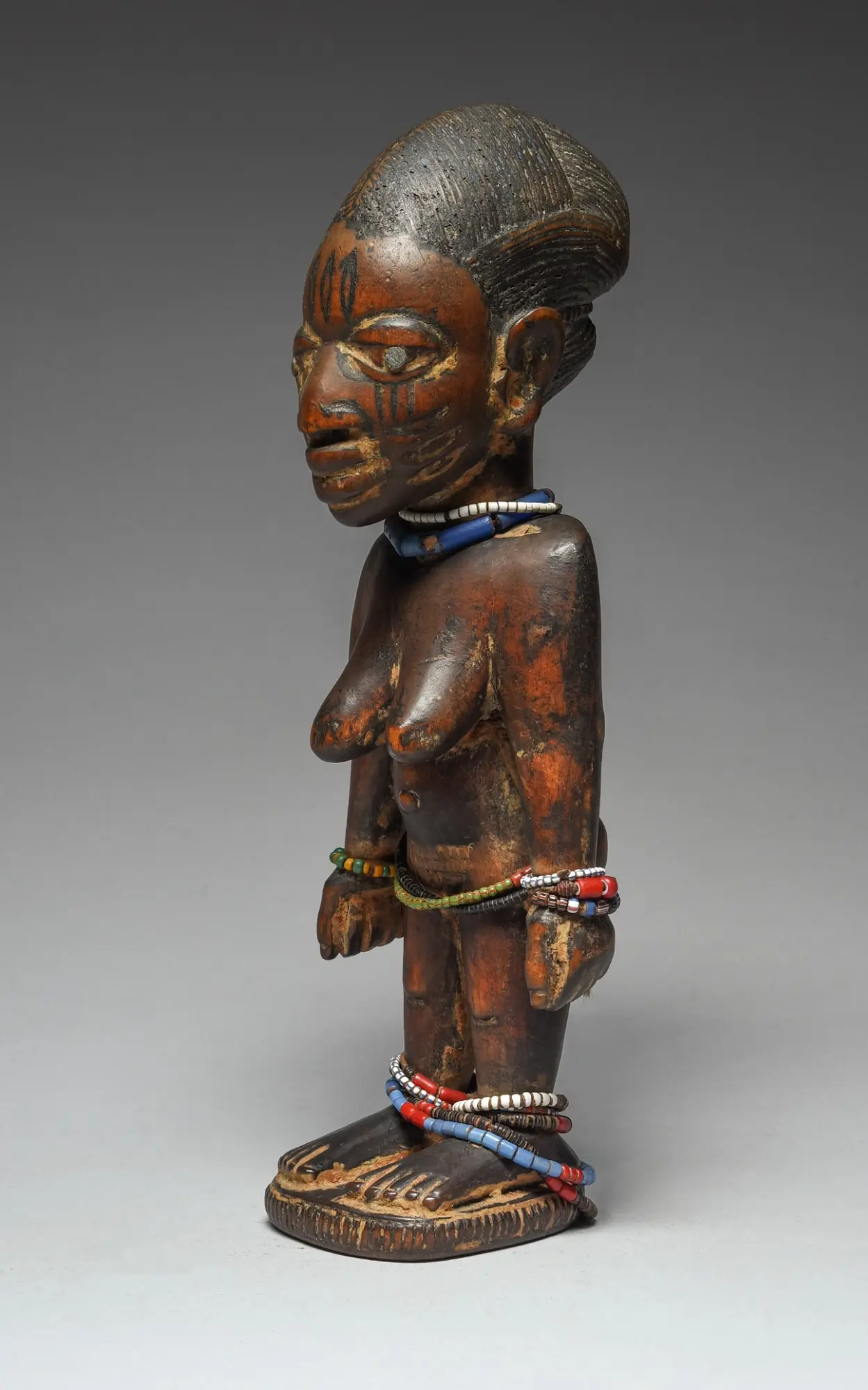
Yoruba female Ere Ibeji figure showing a distinctive coiffure, facial carving and bead ornaments

Named masters · family workshops · attributed hands

From collective language to individual signature

Some Yoruba carvers are known by name; others survive through families and apprentices; many remain anonymous. Careful comparison has nevertheless allowed scholars and collectors to recognize coherent bodies of work and assign useful names to recurring hands.

This section follows major figures in Yoruba sculpture and the workshops connected with Ere Ibeji production. It examines training, transmission and formal invention without forcing certainty where documentation is incomplete.

Ọlọ́wẹ̀ of Ìsẹ̀ · Moshood Olúṣọmọ Bámigbóyè George Bamidele Areogun · Thomas Ona Odulate Adugbologe–Makinde · Duga of Meko · Fakeye family Recognized anonymous masters and regional workshops
Explore Yoruba carvers
02 · Presence and care

The Ibeji Cult

Among Yoruba communities, twins are surrounded by a powerful field of beliefs, praise names and responsibilities. The carved figure belongs to that living system; it was never conceived as an autonomous art object.

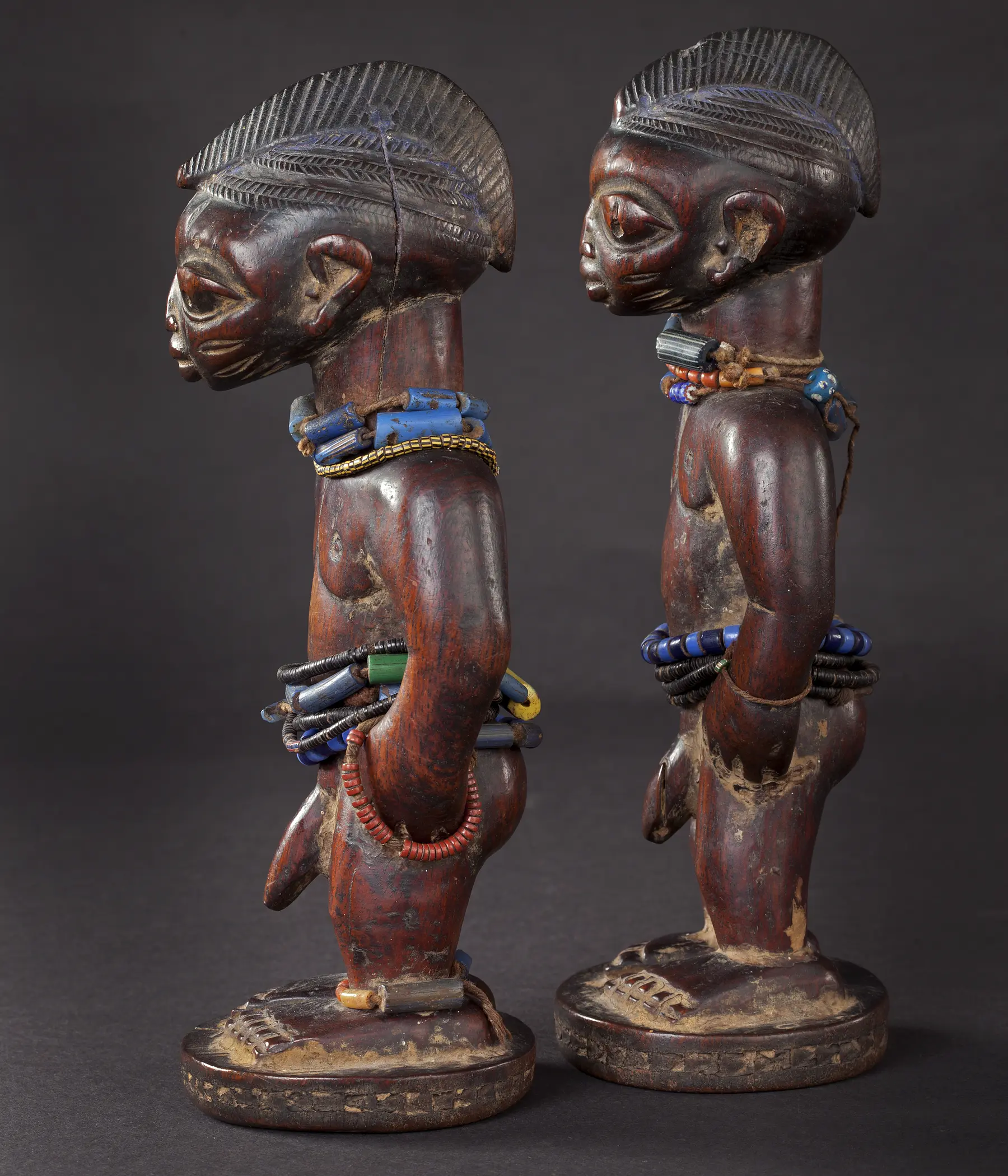
Pair of Yoruba twin figures retaining extensive signs of ritual use

More than an effigy

A continued place within the family

When one twin died, a family could commission a figure to maintain the deceased child's place among the living. The image might be cared for by the mother and, later, by another family member. Practices varied by period, town, household and diviner's guidance; no single formula explains every figure.

Indigo, camwood, oils, beads, metal, clothing and repeated handling could transform the surface over time. These elements are meaningful evidence, but not automatic proof of age or authenticity. Their value emerges from the way they correspond with carving, history and documented provenance.

CareWashing, dressing, carrying and feeding brought the figure into domestic ritual life.
PresenceThe sculpture could mediate memory, continuity and the special spiritual status of twins.
ReadingSurface, additions and wear must be studied together—not used as isolated shortcuts.
Explore the Ibeji cult
03 · Geography of form

Stylistic Areas

“Yoruba” identifies a vast cultural world, not a uniform sculptural type. Local centres developed recognizable solutions in stance, proportion, facial structure, scarification, coiffure and base.

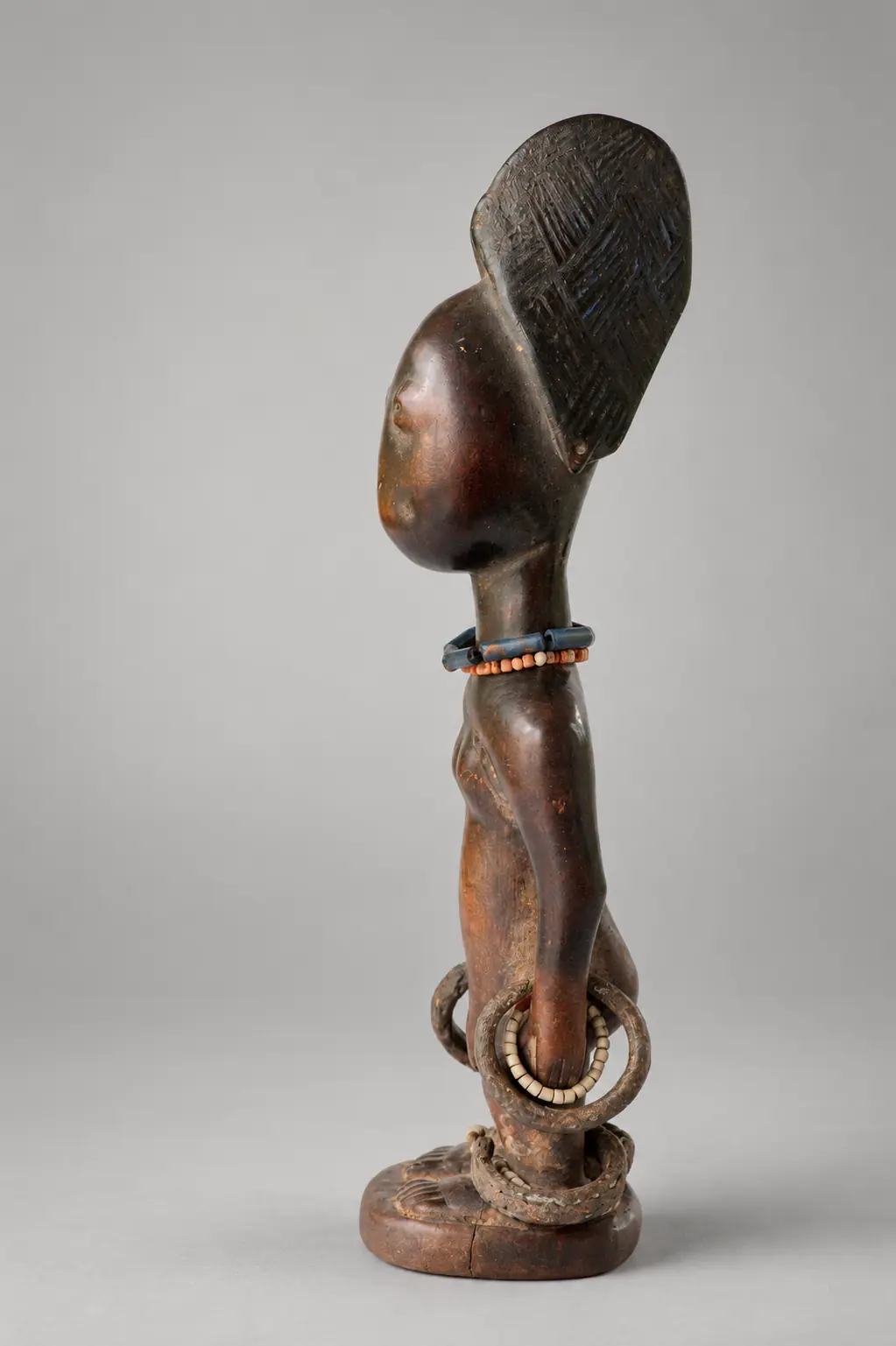
Profile view of an Ere Ibeji highlighting coiffure, body proportions and carved ornament

Attribution begins with comparison

Many centres, many visual grammars

An attribution is built from converging features. Ears alone are not a map; neither is a coiffure, a base or a set of facial marks. The most convincing reading considers the complete figure and allows for workshop movement, trade routes and individual invention.

Oyocourtly balance
Igbominavaried local hands
Ekitistrong workshop identities
Kwara State · Ilorin · Egbecrossroads
Abeokuta · Egba · Egbadosouthern centres
Ijebu · Aworidistinctive vocabularies
Anago–Ketu · Yagbaborder traditions
Explore stylistic areas

04 · A collector's eye

Selected Ibeji

A future sales catalogue built object by object. Each figure will be published only after its photography, attribution, condition and provenance have been carefully prepared.

Quality of hand

Strength of modelling, internal rhythm and the coherence of every carved decision.

Ritual history

Use marks read as a whole, with respect for what can—and cannot—be concluded from a surface.

Provenance

A documented path that supports responsible study, attribution and collecting.

Open the selected Ibeji page
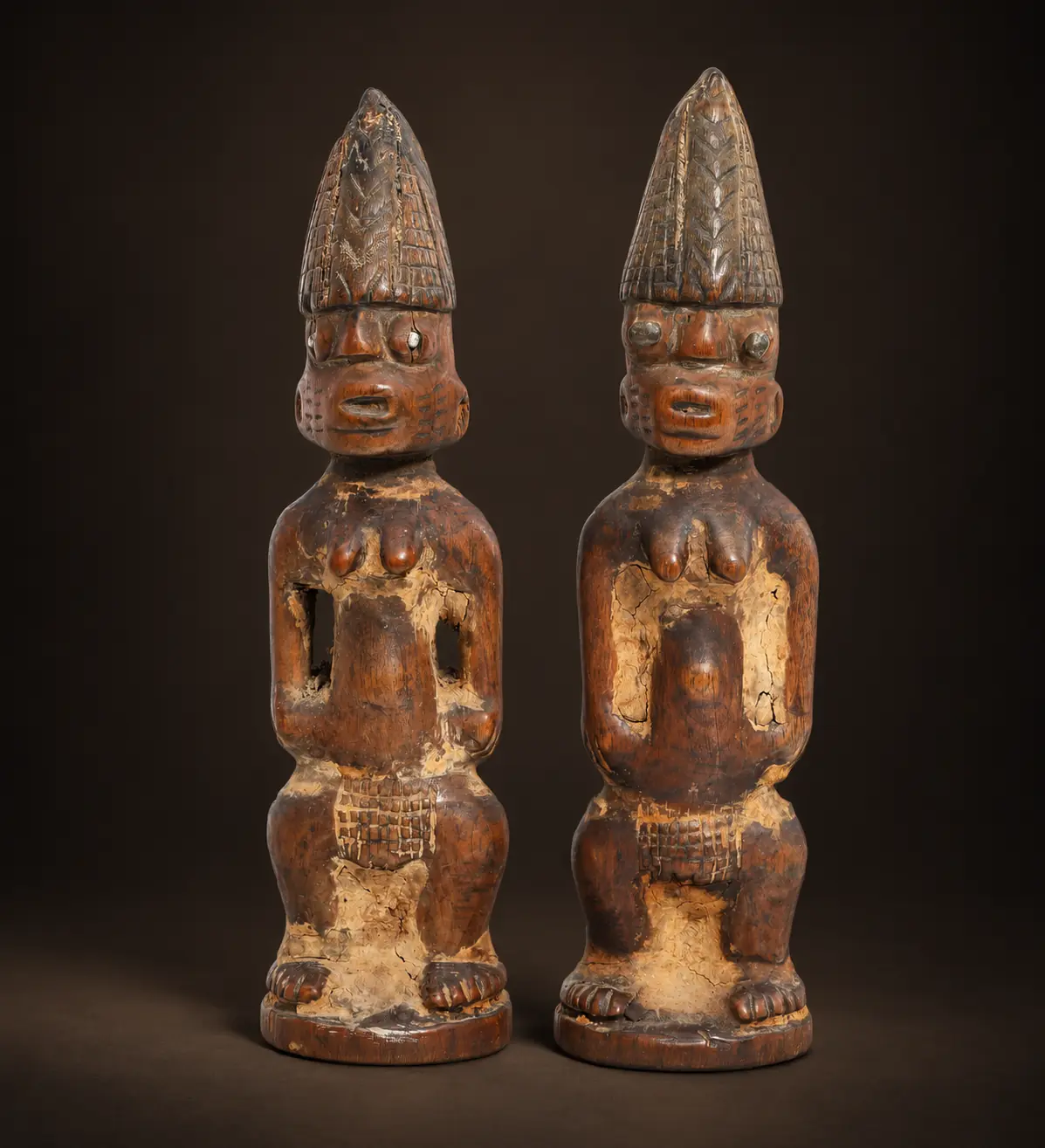
Pair of Yoruba Ibeji figures from the ibeji.fr research website

Go deeper into Ibeji.

Want to know more? Enter the complete English research archive. Visit ibeji.fr/en